Liverpool Engineering
From the world's first commercial wet dock to pioneering railways and tunnels, Liverpool's engineers have shaped modern infrastructure.
Engineering Milestones
World firsts and pioneering achievements that put Liverpool on the engineering map.
World's First Commercial Wet Dock
Thomas Steers
Thomas Steers designed and built the world's first commercial enclosed wet dock, revolutionising maritime trade and establishing Liverpool as a major port. The dock maintained a constant water level regardless of tides, allowing ships to load and unload at any time.
Liverpool and Manchester Railway
George Stephenson
The world's first inter-city passenger railway connected Liverpool to Manchester. Stephenson's 'Rocket' won the famous Rainhill Trials. The line included the pioneering Edge Hill tunnels, the world's oldest railway tunnels still in use.
Albert Dock
Jesse Hartley
Jesse Hartley designed the Albert Dock, the world's first non-combustible warehouse complex. Built entirely from cast iron, brick, and stone with no structural wood, it was a revolutionary approach to fireproof construction.
Liverpool Overhead Railway
Sir Douglas Fox and J.H. Greathead
The world's first electric elevated railway, nicknamed 'The Dockers' Umbrella'. It pioneered automatic signalling, electric lighting throughout, and sliding doors on carriages. Sadly demolished in 1957.
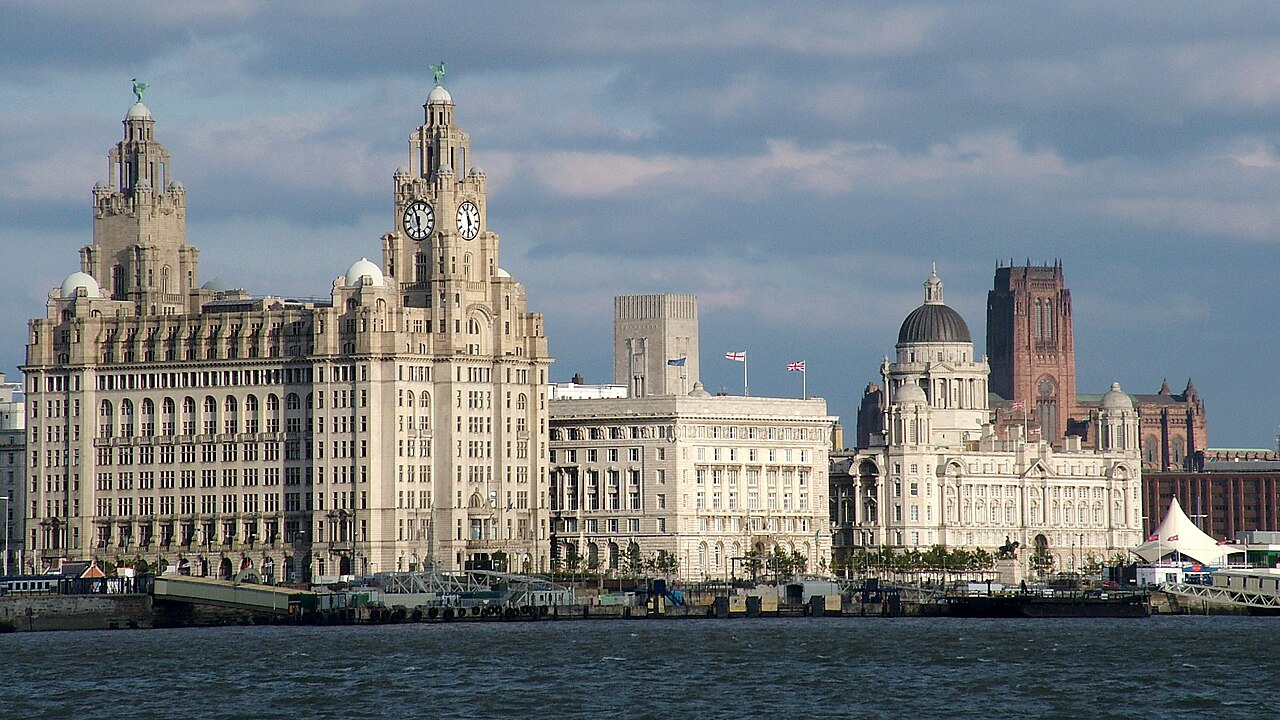
Royal Liver Building
W. Aubrey Thomas (architect), Hennebique system
One of the first buildings in the world to use reinforced concrete construction. At 322 feet, it was the tallest building in Britain when completed and featured the largest clock faces in the UK.
Queensway Tunnel
Sir Basil Mott
When opened by King George V, the Queensway Tunnel was the longest underwater road tunnel in the world at 2.13 miles. It pioneered ventilation systems that became standard for road tunnels globally.
Kingsway Tunnel
Mott Hay and Anderson
The second Mersey road tunnel, connecting Liverpool to Wallasey. Together with Queensway, these tunnels carry over 30 million vehicles annually.
Engineering Pioneers
Jesse Hartley
1780 to 1860
Dock Engineer to the Port of Liverpool
Designed and built Albert Dock, Stanley Dock, and many others. His granite and cast iron structures transformed Liverpool's waterfront.
Thomas Steers
1672 to 1750
Civil Engineer
Built the world's first commercial wet dock, consulted on dock construction across Britain.
William Laird
1780 to 1841
Shipbuilder
Founded Cammell Laird shipyard in Birkenhead, which built some of the world's most famous vessels including HMS Ark Royal.
Sir Joseph Whitworth
1803 to 1887
Mechanical Engineer
Born in Stockport but apprenticed in Manchester and Liverpool. Created the British Standard Whitworth thread system, standardising screw threads worldwide.
Shipbuilding Legacy
Cammell Laird in Birkenhead has been at the heart of British shipbuilding for 200 years, producing vessels that have served navies and merchant fleets worldwide.
- Cammell Laird has built over 1,300 ships since 1824, including aircraft carriers, submarines, and ocean liners
- The RMS Mauretania, built at Cammell Laird, held the Blue Riband for the fastest Atlantic crossing from 1909 to 1929
- HMS Birkenhead (1860) was built at Cammell Laird and gave rise to the 'women and children first' protocol
- The shipyard continues to operate today, specialising in ship repair and marine engineering
Modern Engineering
Liverpool continues to be at the forefront of engineering innovation.
Advanced Manufacturing
The Liverpool City Region is home to Jaguar Land Rover's Halewood plant, producing over 500 vehicles daily. The region has a strong aerospace cluster including Airbus operations.
Tidal Energy
The Mersey has one of the highest tidal ranges in the UK. Various proposals for tidal barrages and lagoons continue to be explored for renewable energy generation.
Urban Regeneration
Major engineering projects continue to transform the city, including Liverpool Waters, a £5 billion regeneration of the northern docklands.
Innovation Hub
The city's universities and research institutions collaborate with industry on cutting-edge engineering projects, from materials science to robotics.
Engineering Connections
Are you an engineer with Liverpool roots? Connect with fellow professionals in the Liverpool International network.
Join the Network